EdD Candidate Centers Students on the Margins

Based on Dana Thompson’s experience at an entry-level job on a research project involving elementary-aged students, she knew that she wanted to work with students and families who are usually marginalized by mainstream education practices.
“I continue to view that as my primary calling and have spent my career working with and advocating for students of color, LGBTQIA+ students, students with disabilities, and others,” said Thompson, who is transgender.
Thompson secured her administrative license (director of special education) through the School of Education and is now working toward a Doctorate in Education (EdD). The program was recommended by a peer and appealed to her for its equity focus.
Her Hamline University administrative license allowed her to achieve her current position supervising middle school special education programming and other support services in the Burnsville-Eagan-Savage district which serves approximately 1300 students enrolled in special education programs.
“Every student is unique and support services help to address each student’s individual needs related to disability, mental health, culture, financial status, and others,” said Thompson. “Support services help break down barriers and allow access to education, improving learning and academic outcomes.”
Useful Lessons and Flexibility
Thompson hopes to work as a school superintendent eventually and a personal goal and a love of learning drove her pursuit of an EdD. Along the way, Thompson has found the lessons in her Hamline classrooms related to her job, especially around leading her team and equity.
“I have used the things I learn in my classes around leadership and working with teams the next day at work,” said Thompson.
Along with a rigorous learning environment, Hamline provided a welcoming and flexible program.
Thompson noted that sometimes life got in the way of school but the Hamline faculty, including dissertation advisor Trish Harvey and administrative licensure program director Kim Hartung were understanding and they continue to be supportive.
The program has led to meaningful personal and professional connections.
“A primary benefit to the EdD program was the cohort model,” said Thompson. “The friendships I gained have proven to be enduring and I reach out to the individuals in my cohort frequently for advice and ideas.”
A Research Project with Purpose
Her classroom work complete, now Thompson is working on her dissertation, which focuses on the experiences of teachers who undergo gender transition while working.
“The research will dive into workplace protections; parent, colleague, and student reactions; avenues for advocacy, and more,” said Thompson.
Thompson, who transitioned while working and attending classes at Hamline, found little academic research and few personal narratives to support her journey.
“I started in my district presenting male (as I was assigned at birth) and transitioned while working two years ago,” said Thompson. “If I had someone I could look to, I would not have waited so long.”
A pathbreaker, she is open about her transition and now serves as the role model she had wished for. Thompson also hopes her research will help others.
“The goal of my research is to help create an environment that is welcoming to trans teachers and acceptance among students,” said Thompson. “I hope to impact how districts support their transgender staff and students. I also hope to demonstrate the value of transgender teachers when it comes to representation and student advocacy.”
Sun This Week
Teacher burnout, stress come with the pandemic
“Burnout cascade” and “secondary traumatic stress” are terms showing up in research on effects of the pandemic on teachers.
A cascade of stress and exhaustion can lead to classroom conflict, poor problem-solving, poor teacher reaction to student behavior and, in turn, more of the same behavior, said Dana Thompson, special education supervisor in School District 191.
Teachers experience secondary traumatic stress by absorbing the traumas of their students while dealing with their own — “compassion fatigue,” Thompson said.
The district has mental health support available for teachers and students, she told the Burnsville-Eagan-Savage School Board Jan. 27.
“Research shows staff well-being has direct impact on student achievement,” Thompson said.
A national survey from the Mission Square Research Institute shows how shifting learning models and other complications of COVID-19 are affecting the profession.
Twenty-seven percent of teachers self-reported symptoms consistent with clinical depression, Thompson said. Thirty-seven percent reported symptoms consistent with generalized anxiety.
Fifty-three percent said they are thinking of leaving the profession — more now than before the pandemic, Thompson said. Thirty-nine percent of K-12 employees reported working more hours than before the pandemic. They were “significantly more likely” to perceive themselves at risk of exposure to COVID-19 than other government employees, she said. And six of 10 reported their families have suffered negative financial impacts.
The top three reasons for the heavier workload are the extra work involved in remote teaching, social distancing protocols and an increase in meetings with parents and students, according to a district report.
Nineteen percent of teachers said they started or increased alcohol use to cope with pandemic stress, Thompson said.
“Self-care needs to be built into the culture of the school,” said Thompson, a certified school psychologist.
During the pandemic the district has tried to reduce teacher time commitments by limiting new initiatives to what the staff could handle, she said.
“Some could be paused, some could be adjusted and some needed to continue moving forward,” Thompson said.
Teachers have access to mental health and counseling services as well as restorative circles during and after school meetings.
“Most visibly,” they see other district staffers covering some of their duties when schools are short-staffed, Thompson said. Teachers say it’s important to see administrators filling in the classroom, during lunch and even at the front desk, she said.
“We’re all in this together,” she said.
Positive affirmations help, such as notes and treats in mailboxes, potluck breakfasts and time and space to recharge, said Megan Gauer-Kloos, school social worker at Hidden Valley Elementary.
“School efforts toward creating a positive culture and climate are especially robust,” she said.
MICC College Newsletter
Guest Speaker Highlight
| MICC’s Diversity, Equity, & Inclusion Committee sponsored a fantastic guest speaker this past week, Dana Thompson, who spoke about the LGBTIQA+ community with a focus on the transgender community. Dana’s talk, “Finally Dana. A Story of Transition and Supporting the Transgender Community”, involved Dana sharing her own journey of transitioning and providing research on transgender people and the risk factors that often haunt them. Dana’s talk also included protective factors that should be available for the transgender community along with ways to best support them for allies. This talk was presented to all MICC staff and open to any participant who wanted to attend. |
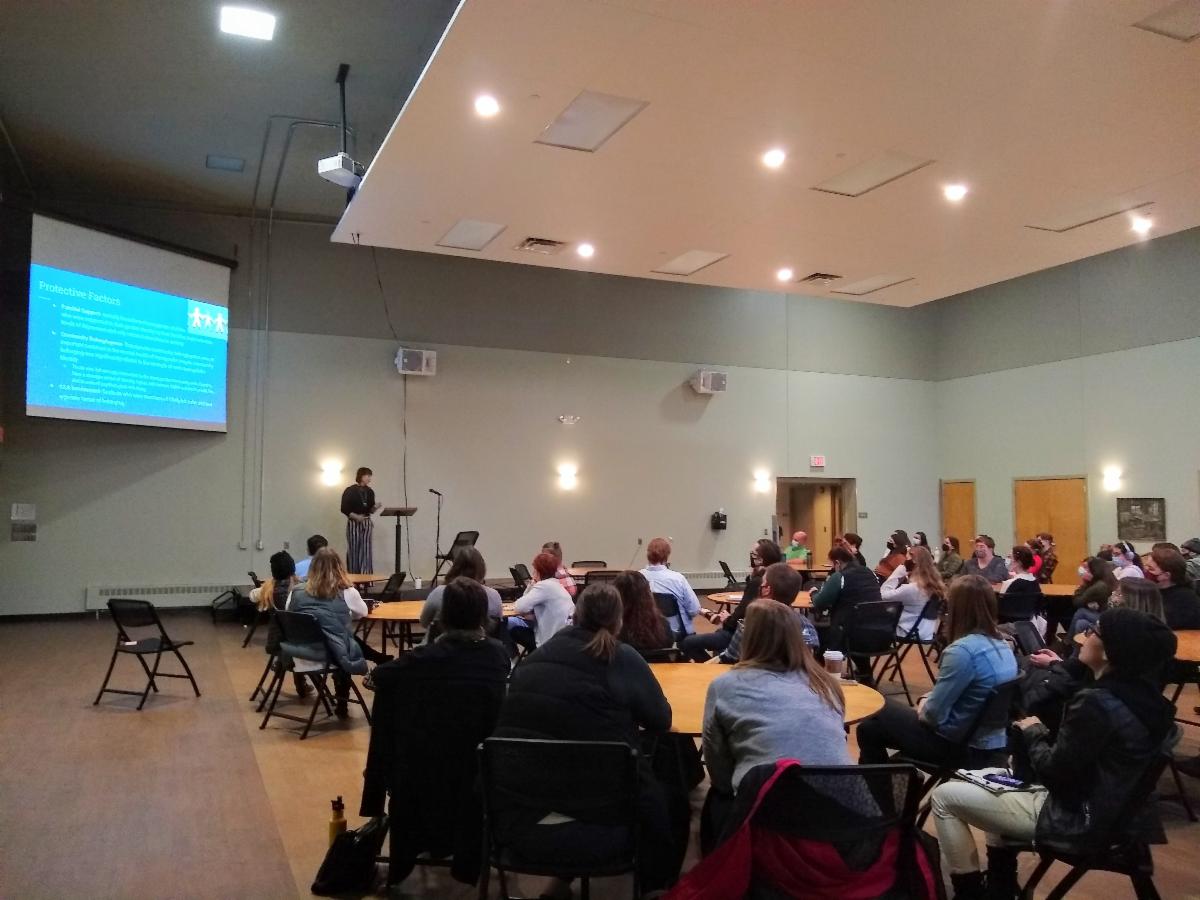 |
| Dana Thompson has her Masters of Science in Education, Education Specialist in School Psychology, is a licensed special education director, a nationally certified school psychologist, and is now finishing her doctor of education (ABD) with her dissertation focusing on workplace protections, parent, colleague, and student reactions, and avenues for advocacy. Dana is currently the Supervisor of Student Support Services and Special Education at Burnsville-Eagan-Savage School District 191. |

